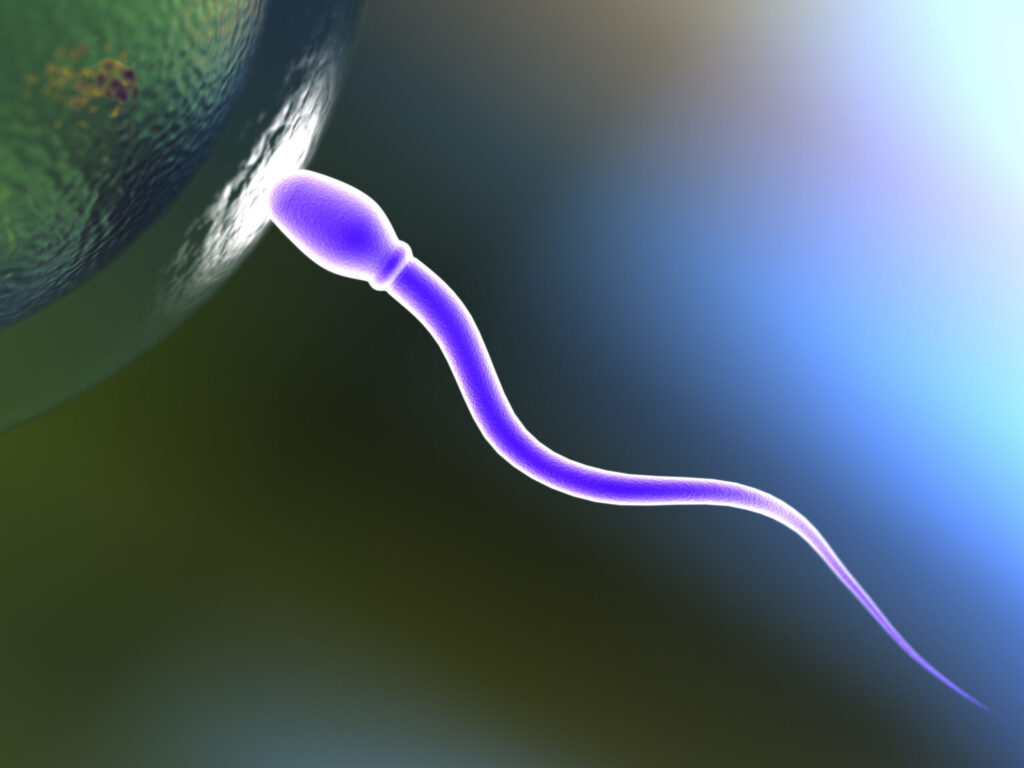
Retrograde ejaculation is a condition in which semen travels up into the bladder rather than down through the penis during ejaculation. Some semen may exit the penis, but most of the semen enters the bladder and mixes with urine. This condition, also known as a dry orgasm, is harmless but can be a cause of male infertility.
What causes retrograde ejaculation?
During sexual activity, as semen is leaving the body, it normally avoids entering the bladder due to a tightening of the bladder neck muscle. When this muscle is weak or damaged, it can inadvertently allow ejaculate to travel up into the bladder.
There are several reasons why the bladder neck muscle may not function properly. These causes are as follows:
Surgical damage – Men who have had surgery related to prostate, bladder or testicular cancer may sustain damage to the muscle or surrounding nerves. These surgeries include a radical prostatectomy (removal of the prostate), cystectomy (removal of the bladder) and retroperitoneal lymph node surgery (testicular cancer). Men who undergo certain surgeries for benign prostatic hyperplasia (enlarged prostate) may also suffer injury.
Disease states – Retrograde ejaculation can be caused by health conditions that can cause nerve damage, including diabetes, multiple sclerosis, and Parkinson’s. Injury to the spinal cord is also a factor.
Medications – Some medications prescribed for an enlarged prostate, high blood pressure or mood disorders (such as depression) may cause retrograde ejaculation.
There is some discussion regarding radiation therapy and this condition. Groin radiation does not cause retrograde ejaculation; it causes dry ejaculation which is similar. If the semen was not dried out, it would still be expelled forward. Retrograde ejaculation is usually caused by an anatomical disruption of the prostate or nerves that trigger ejaculation. Radiation therapy for prostate cancer does cause these symptoms. Finally, radiation therapy for testicular cancer is never aimed at the groin. It is aimed at the abdomen and pelvic above the groin, which does not cause retrograde ejaculation.
Diagnosis and treatment
During an office visit, a Urologist will review the patient’s medical history, their current health status, and any medications they have been prescribed. The provider will also conduct a physical examination, and order a urinalysis to determine if sperm is present in the urine. If the patient is taking a medication that is known to contribute to retrograde ejaculation, the medication may be stopped or changed.
Depending on its cause, sometimes a medication can be prescribed to treat this condition. However, the nerve damage being treated must be mild and caused by a disease state or a minor injury to the spinal cord. Medication cannot reverse surgical injury or severe nerve damage.
Male infertility
For couples who are trying to conceive a child, retrograde ejaculation can hamper their efforts due to a lack of sperm. In such cases, fertility procedures such as sperm retrieval and in-vitro fertilization (IVF) may need to be considered for a successful pregnancy.
If you are experiencing a dry orgasm, contact Urology Austin to schedule an appointment for evaluation.