Prostate biopsy overview.
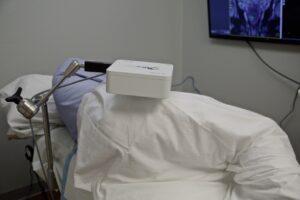
When patients have a prostate biopsy, the urologist will remove small samples of prostate tissue to be tested for cancer. The biopsy will be performed using a transrectal (through the rectum), ultrasound guided, prostate needle biopsy. Each tissue sample is inspected and interpreted by a pathologist who will give a final opinion to the urologist. Prostate biopsies are generally done in-office using a local pain block. They may be performed in a surgery center, or hospital, if the patient has several health complications.
Prostate biopsy risks
There are possible risks with any medical procedure. Prostate biopsy risks will vary depending on provider technique, pre-existing health conditions, and the patient’s overall health. Common risks include:
- Bleeding
- Pain
- Infection
- Difficulty urinating – this should correct itself as prostate swelling subsides. However, if the patient is completely unable to urinate (urinary retention), they should seek immediate medical help.
- Inconclusive results or results that are difficult to interpret.
- “Blind” biopsy may miss cancerous cells.
- The presence of blood in the ejaculate following the procedure.
- A slight presence of blood in stool since the procedure is done through the rectum. If rectal bleeding occurs, the patient should contact their provider’s office as soon as possible.
Biopsy preparation
Prior to the biopsy, patients will be asked to prepare themselves in advance, and to discontinue some behaviors. These will include:
- Use a fleet enema at home, approximately two hours before the biopsy.
- Discontinue the use of blood thinners (including aspirin) approximately five days prior to the procedure.
- Do not use alcohol prior to the biopsy.
- Bring a driver who can take you home after the procedure.
There are no dietary restrictions prior to the biopsy procedure.
The biopsy procedure
Before starting the procedure, a local pain medication will be inserted through the rectum to numb the area in order to minimize any discomfort. After allowing time for the numbing agent to take effect, the biopsy will be performed by inserting a probe through the rectum to the prostate. This probe contains a needle that will sample prostate tissue. The use of an ultrasound is essential to guide placement of the needle, in order to obtain tissue samples.
Each time a sample is taken, an automated spring mechanism, located inside the probe (biopsy gun), will make a snapping or popping sound. After each collection, a medical assistant will take the specimen, label it and return the biopsy gun to the urologist in order to biopsy another area of the prostate. There is no minimum or maximum number of biopsies, but average numbers are between 12 to 24 samples.
New biopsy technology
In the past, “blind” biopsies were the standard way to perform this procedure. Essentially, ultrasound imaging was used to guide sample collection, but the provider was unable to see inside the prostate to biopsy suspicious areas. Today, Urology Austin can utilize the UroNav Fusion Biopsy System which allows providers to visualize suspicious areas through the marrying of a Multiparametric MRI and ultrasound imaging. By using the UroNav system, our urologists are able to see areas of concern, and specifically target those areas when taking tissue samples. This technology has helped improve their ability to make a positive diagnosis by testing tissue that is suspected to be cancerous.
If you require a prostate biopsy, and would like to know more about targeted biopsies, contact Urology Austin to schedule an appointment with one of our urologists.
Related link